
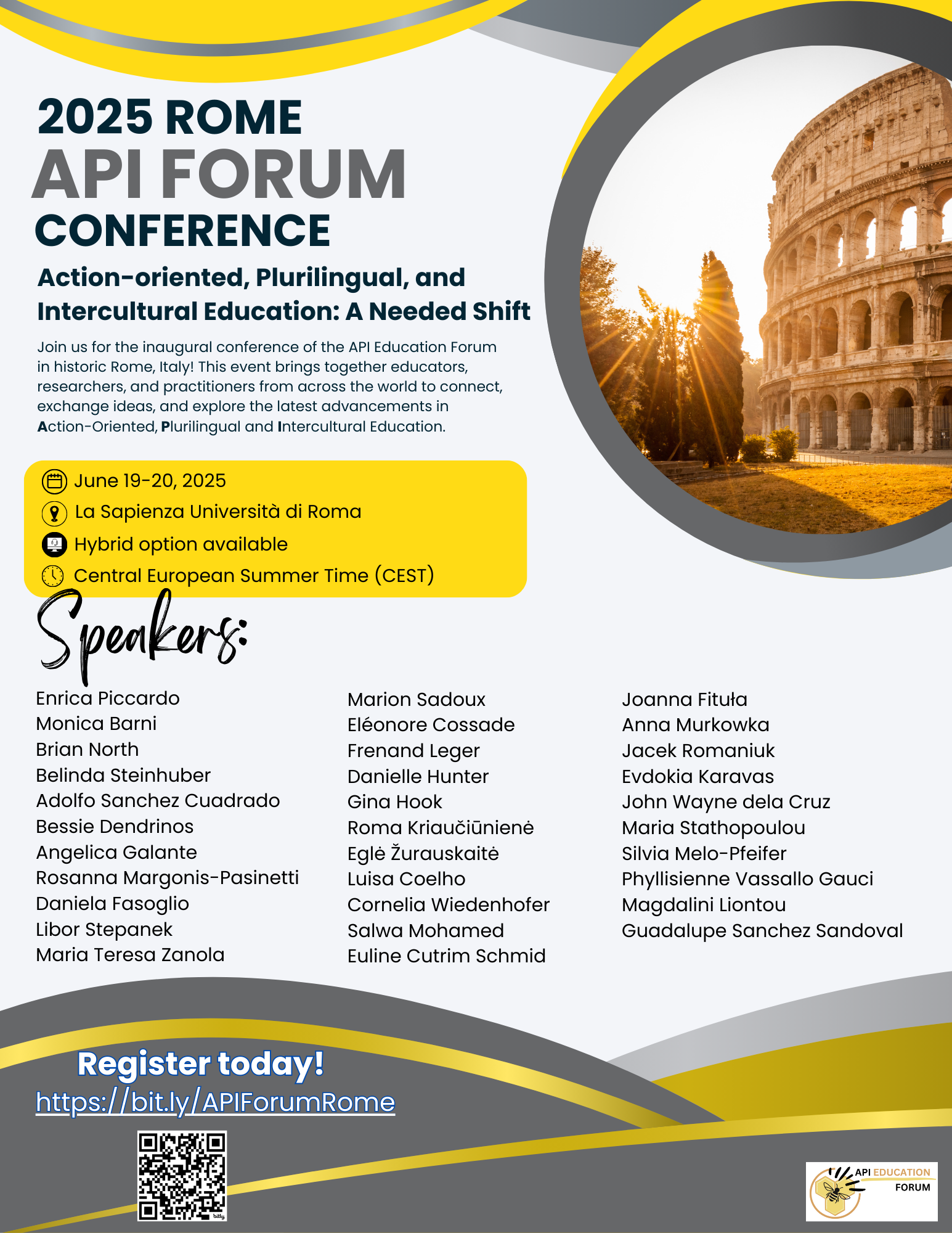
June 19-20,2025
2025 ROME
API FORUM CONFERENCE
> Introduction
> Program
> Plenaries
> Workshop Sessions
> Presentations
> Poster Sessions
Action-oriented Plurilingual and Intercultural Education:
A needed shift in Language Education
Sapienza Università di Roma
19-20 June 2025
This conference is the first official event of the API Education Forum, founded as an association under Swiss law following a ‘set up meeting’ held online on 4 June 2024, completing an initiative decided at a Journée d’études held in hybrid form at the Council of Europe, Strasbourg on 15 June, 2023.
The objectives of the conference are:
- To enable members of the forum to meet each other and network in person
- To offer state-of-the-art presentations on Action-oriented Plurilingual and Intercultural Education
- To provide members with up-to-date information about relevant recent and forthcoming research, projects and publications
- To hold the first Annual General Meeting of the Forum
When Human Rights are at stake, silence is not an option.
Peace and Justice for Palestine
Action-oriented Plurilingual and Intercultural Education:
A needed shift in Language Education
Sapienza Università di Roma
19-20 June 2025
This conference is the first official event of the API Education Forum, founded as an association under Swiss law following a ‘set up meeting’ held online on 4 June 2024, completing an initiative decided at a Journée d’études held in hybrid form at the Council of Europe, Strasbourg on 15 June, 2023.
The objectives of the conference are:
- To enable members of the forum to meet each other and network in person
- To offer state-of-the-art presentations on Action-oriented Plurilingual and Intercultural Education
- To provide members with up-to-date information about relevant recent and forthcoming research, projects and publications
- To hold the first Annual General Meeting of the Forum
When Human Rights are at stake, silence is not an option.
Peace and Justice for Palestine
Flyer
Program
Thursday 19th June
|
14.00 – 14.15 |
Opening and Welcomes: Aula Partenone |
|
|
14.15 – 15.00 |
Opening Plenary: Aula Partenone Teacher agency to foster learner agency: opportunities and challenges Prof. Enrica Piccardo, Ontario Institute for Studies in Education (OISE), University of Toronto |
|
|
15.00 – 17.20 |
Information sessions: 15-min presentations on recent or upcoming research, projects, publications |
|
|
|
Aula Partenone |
Aula V |
|
15.00 – 15.15 |
From “communicative” to action oriented: paradigm shifts for teachers and learners Prof. Marion Sadoux & Eléonore Cossade University of Oxford |
Mettre en œuvre les principes du CECR dans des manuels de FLS dans le contexte de l’enseignement supérieur au Canada anglophone Dr. Frenand Leger, Carleton University, Ottawa |
|
15.20 – 15.35 |
Fostering pedagogical innovation through action-oriented scenario webs Danielle Hunter & Gina Hook, Durham District School Board, Ontario |
Action-oriented, Plurilingual, and Intercultural Approaches in Language Education at the Tertiary Level Prof. Roma Kriaučiūnienė & Dr. Eglė Žurauskaitė, Vilnius University |
|
15.40 – 15.55 |
Is AI an enabler of a plurilingual classroom? Dr. Luisa Coelho & Cornelia Wiedenhofer, University of Oxford |
Implementing Scenario-Based Learning in University-Level Arabic: Learners’ Needs and Perceptions Dr. Salwa Mohamed, Manchester Metropolitan University |
|
16.00 – 16.15 |
Integrating Plurilingualism in Virtual Exchanges: Insights from the TEMPLATE Project Prof. Euline Cutrim Schmid, University of Education Schwaebisch Gmuend |
Is API education challenging? Vade mecum for HE teachers Prof. Joanna Fituła, Dr. Anna Murkowka & Dr. Jacek Romaniuk, University of Warsaw |
|
16.15 – 16.45 |
Meet & Greet Coffee Break & Poster Sessions |
|
|
16.15 – 16.45 |
Posters |
|
|
|
Homo Zappiens et Ludens: Apps as a Context to Develop Students’ Speaking Competences in a Gamified Environment Ionut Capeneata, National University of Science and Technology POLITEHNICA Bucharest |
|
|
Exploring Teachers’ Beliefs on Plurilingual Policies in Europe Dr. Diego Cortés Velásquez, University of Roma Tre |
||
|
Mediating Across Languages and Cultures: A Multimodal Duoethnography of Plurilingual Teacher-Researchers Dr. Giacomo Folinazzo, Niagara College |
||
|
|
Aula Partenone |
Aula V |
|
16.45 – 17.00 |
Instrumental Hebrew for Palestinian Youth: An API Paradigm Shift Chaya Fischer, freelance
|
Plurilingual Identity Wheel (PluriWheel): Novel tool for investigating dynamic plurilingualism John Wayne dela Cruz, McGill University, Montreal |
|
17.05 – 17.20 |
Challenging the monolingual mindset: cross-linguistic mediation and multilingual assessment practices in language education Dr. Maria Stathopoulou, Hellenic Open University, Patras, Dr, Silvia Melo-Pfeifer, University of Ham-burg, Dr. Phyllisienne Vassallo Gauci, University of Malta & Mag-dalini Liontou, University of Oulu, Finland distance |
A Plurilingual Approach to Sustainability Courses in Mexican Higher Education Guadalupe Sanchez Sandoval, University of Toronto distance
|
|
17.25 – 18.45 |
Workshop sessions |
|
|
Aula Partenone Encouraging plurilingual approaches in upper secondary vocational education Prof. Mag. Belinda Steinhuber, Center für berufsbezogene Sprachen, Vienna |
Aula V Mediation as a tool for action-oriented language teaching and assessment Dr. Adolfo Sanchez Cuadrado, Universidad de Granada, Spain |
|
|
18.45 – 19.30 |
Defining Special Interest Projects (SIPs) |
|
|
20.00 |
Dinner |
|
Friday 20th June
|
09.00 – 10.15 |
Panel Discussion: : Aula Partenone Achieving Change in Language Education Bessie Dendrinos (National and Kapodistrian University of Athens); Daniela Fasoglio (Dutch Institute for Curriculum Development – SLO); Angelica Galante (McGill University, Montreal distance); Rosanna Margonis-Pasinetti (Haute école pédagogique du canton de Vaud); Libor Stepanek (Masaryk University); Maria Teresa Zanola, (Università Cattolica di Milano). Chair: Brian North |
|
10.15 – 11.00 |
Presentations of SIPs: Aula Partenone |
|
11.00 – 11.30 |
Coffee Break |
|
11.30 – 12.00 |
Closing Plenary: Aula Partenone Plurilingualism: A human trait throughout history; a necessity for today’s Europe Prof. Monica Barni, La Sapienza Università di Roma |
|
12.00 – 13.30 |
API Education Forum: 1st Annual General Meeting: Aula Partenone |
|
13.30 |
Departure of conference participants |
|
14.00 – 17.00 |
API Committee Meeting |
Plenaries
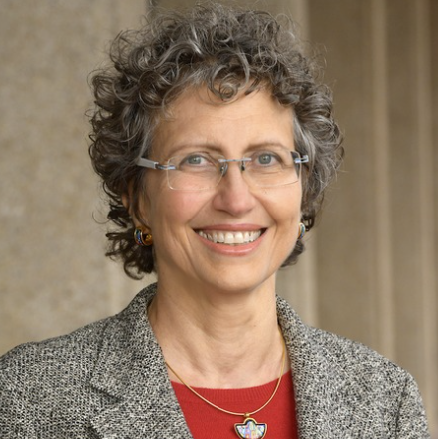
Teacher agency to foster learner agency: opportunities and challenges
Thursday 14.15–15.00
Aula Partenone
Prof. Enrica Piccardo, Ontario Institute for Studies in Education (OISE), University of Toronto
In the last decades, a new attitude has emerged in language education, marked by a dynamic, plurilingual vision (Beacco et al., 2016; CEFR Expert Group, 2023; Larsen-Freeman & Todeva, 2022; van Lier, 2007). In research, language learning is increasingly conceptualized as a process of (co)construction of meaning across linguistic and cultural boundaries, requiring different types of mediation (Council of Europe, 2020, Dendrinos, 2024), which are crucial for the development of an inclusive and diverse society (Galante et al. 2024). In addition, action-oriented approaches have been foregrounded that prioritize real-world usage of the language, positioning learners as social agents, engaged in their learning process (Piccardo & North, 2019; Piccardo et al., 2022). Nevertheless, language teaching and learning continues to be largely resistant to change (Lawrence et al., 2020; Luckin et al., 2022), with compartmentalised methodologies and monolingual orientations still permeating language teacher beliefs, resulting in a linear progression based on grammatical and lexical knowledge rather than the organization of curricula around real-life language needs.
While language educators have increasingly recognized the potential of plurilingual action-oriented education and the need to effectively leverage learners’ linguistic and cultural resources (Kessler, 2021; Séror, 2022), they are often hesitant to adopt a dynamic posture in language and culture education that sees its goal in action rather than in achieving perfection. This presentation will discuss both opportunities and challenges educators face when trying to innovate in the language class.
After introducing the notion of agency as a pivot for innovating the teaching/learning process, the presentation will discuss the potential of a curriculum organized around action-oriented scenarios to enable a shift from a linear to a dynamic view of language education, one that supports learners’ agency and makes space for diverse forms of mediation and creativity. A synthesis of data from three consecutive research projects conducted with language teachers on ways to innovate language education will be presented that show the crucial role of both learner and teacher agency in enabling the above-mentioned shift. Based on these data I will discuss both the potential of action-oriented plurilingual scenarios to innovate language education and the issue of teacher agency when it comes to operationalizing plurilingual, action-oriented and technology-mediated pedagogies, showing the importance of supporting both teachers and learners in their ability to adapt and mediate in the face of novelty and uncertainty.
Finally, the presentation will explain the conceptualization, methodology and initial findings of a multi-year, Canada-wide study, Advancing Agency in Language Education (AALE), which built on the results of earlier research projects. AALE investigates the relationship between teacher beliefs and the role of teacher agency to foster pedagogical innovation. Findings from the first phase of AALE will be presented that reveal teachers’ enthusiasm for innovative plurilingual, action-oriented, and technology-mediated practices along with tensions about implementing such practices.
Dr. Enrica Piccardo is a Full Professor of Applied Linguistics and Language Education at the Ontario Institute for Studies in Education, University of Toronto and the Head of the Centre for Educational research in Languages and Literacies. A collaborator with the Council of Europe (CoE), co-author of the Common European Framework of Reference for Languages (CEFR) Companion Volume (2020), and member of the CEFR expert group, she has coordinated various international research projects both in Canada and in Europe. Her research spans language teaching approaches and curricula, multi/plurilingualism, creativity and complexity in language education, and assessment.
Plurilingualism: A human trait throughout history; a necessity for today’s Europe
Friday 11.30–12.00
Aula Partenone
Monica Barni, Sapienza Università di Roma
The term ‘plurilingualism’ was first introduced into the Italian tradition of language studies fifty years ago and was defined (De Mauro, 1975) as follows:
- a natural trait inherent in all human beings;
- the ‘normal’ condition for the construction (and co-construction) of meaning, using the plurality of semiotic means at one’s disposal;
- a condition for democracy through democratic language education.
The aforementioned definition underscores the potential intrinsic to the concept, concomitantly highlighting the challenges and threats it poses. The theoretical framework underpinning this approach encompasses not only a vision of language, languages and language competences, but also a precise political vision of language education and of the use of languages as a political means. Since that time, the concept of a plurilingualism linked to democratic education has been the subject of considerable political controversy.
Despite that the concept of plurilingualism has been circulating for many years, particularly since the so-called multi/plurilingual turn of 2014-15 (Conteh & Meier, 2014; May, 2014; Piccardo & Capron Puozzo, 2015), and the term has become widely known as a result of its promotion in the Common European Framework of Reference for Languages (Council of Europe, 2001), the extent to which it has impacted classroom practice is very limited. The prevailing monolithic perspective regarding the language of schooling and the other languages in student’s repertoires or taught continues to dominate, with these languages being taught as distinct subjects, rather than as components of a unified whole.
Conversely, the notion that the provision of a plurilingual, democratic and inclusive education, with a view to cultivating active citizenship and plurality, poses a problem for literacy in the language of schooling and for the academic success of pupils remains entrenched. It is evident that this assumption is underpinned by a precise political intent in support of a nationalistic vision that exalts the ‘trinity’ of one language, one people, one nation.
The case of the Italian National Guidelines for School Curricula (nursery & primary), recently drawn up by the Ministry of Education and Merit (Nuove Indicazioni 2025 – Scuola dell’infanzia e Primo ciclo di istruzione – Materiali per il dibattito pubblico, 2025), whose objective is to completely erase the reference to plurilingual and democratic education underpinning the previous National Guidelines (Ministero dell’Istruzione, dell’Università e della Ricerca, Indicazioni mnazionali per il curricolo della scuola dell’infanzia e del primo ciclo di istruzione, 2012), seems to me emblematic of how language and language education can constitute a element of a political project that aims to promote the resurgence of sovereignist nationalism.
By elaborating on the Italian case, this presentation discusses the role and importance of plurilingualism and plurilingual education in sustaining the ideals of the European Union.
Monica Barni is Professor of Educational Linguistics at the Sapienza Università di Roma. Her research focuses on the teaching, learning and assessment of languages, with a special interest in Italian as an additional language in Italy, as a heritage and foreign language around the world. She is concerned with theoretical, methodological, and ethical issues in language testing and assessment and in mapping immigrant languages in Italian society and schools. She is also interested on the impact of national and European language policies. She has coordinated and participated in numerous regional, national, and European funded research projects on the above issues.
Workshop Sessions
Encouraging plurilingual approaches in upper secondary vocational education
Thursday 17.25–18.45
Aula Partenone
Belinda Steinhuber
In Austria, English is the first foreign language taught in upper secondary vocational education. In several types of schools, a second foreign language is compulsory. The two languages are traditionally taught and assessed separately. In their future professional and private lives, though, graduates will inevitably encounter situations requiring plurilingual and pluricultural competences and thus need to draw on all their language resources. Over 20 years ago, inspired by the first draft of the CEFR, the idea emerged to create an optional subject where those plurilingual and pluricultural competences are consciously developed. Since then, curricular reforms in upper secondary vocational education and changes to the official school leaving examination have made it possible to position plurilingual and pluricultural competences more firmly as part of the educational objectives. If not carefully planned and introduced, though, such a shift may lead to feelings of insecurity and resistance among teachers.
This workshop will provide an overview of the steps taken to implement plurilingual teaching practices, from creating classroom activities to developing a plurilingual oral exam and offering professional development seminars. Participants will gain insight into the principles and beliefs that have guided us and how we try to ensure that teachers feel supported and included in the process. They will analyse and discuss teaching and training materials as well as sample tasks of the oral exam. There will also be the opportunity to exchange ideas on how plurilingual approaches can be encouraged in other educational contexts.
Biography of Belinda Steinhuber
Belinda Steinhuber is head of the language education department within CEBS, an institution affiliated to the Austrian Federal Ministry of Education, Science and Research. She has a leading role in the promotion of plurilingualism and intercultural competence in vocational language teaching at upper secondary level, which includes the design of plurilingual exams and teaching materials, and participates in several other assessment projects. She holds an MA in Professional Development for Language Education and is involved in the implementation of educational standards and curriculum design. She is a teacher trainer and teaches English and French at an upper secondary vocational college.
Mediation as a tool for action-oriented language teaching and assessment
Thursday 17.25–18.45
Aula V
When dealing with pedagogical innovation, careful attention must be paid to the pre-existing beliefs and practices of stakeholders in order to avoid either rejection due to an excessive state-of-the-art perspective or objection because of conflict with well-established knowledge. We believe that the shift to action-oriented approaches in language learning can suffer from this setback due to the well-instilled and widespread implementation of the communicative approach. Teachers may find it somewhat difficult, if not unnecessary, to move away from traditional communicative activities to more complex project- or scenario-based practices if they do not have a clear picture of how the latter differ from the former, especially in terms of cost-benefits, i.e., how much new do I need to learn as a teacher to have students do something that unquestionably proves to be more conducive to learning. From a teacher-training perspective, this workshop explores this phenomenon in relation to the implementation of mediation in adult language learning and assessment practices, namely, learning materials and activities. Participants will implement and evaluate teacher-training artifacts developed to help teachers become aware of the complexities that mediation entails, but also the potential it offers, when aligning learning and assessment to action-oriented approaches if we draw on our experience with previous communicative approaches. These artifacts will then be used to analyse the shift from communication to action in sample learning activities and formative assessment instruments.
Biography of Adolfo Sánchez Cuadrado
Adolfo Sánchez Cuadrado holds a PhD in Applied Linguistics from the University of Granada, where he currently works as a lecturer at the Department of General Linguistics and Literary Theory. Previously, he was a teacher of Spanish and Translation at the University of Delaware 1999-2000, at the Modern Language Centre of the University of Granada 2000-2016, and at University College London 2016-2018. His research interests lie within the fields of pedagogical translation, linguistic/cultural mediation, cognitive linguistics, and group/classroom dynamics in foreign language teaching. Among his publications are chapters in Lingüística cognitiva y ELE (Routledge, 2019) or Mediación en el aprendizaje de lenguas. Estrategias y recursos (Anaya, 2022; coordinator). He has also contributed to scientific journals such as Journal of Spanish Language Teaching (2017) or Review of Cognitive Linguistics (2023). He regularly teaches courses and master’s seminars at several institutions. He was the main translator of the Spanish version of the CEFR Companion volume.
Presentations
From "communicative" to action oriented: paradigm shifts for teachers and learners
Thursday 15.00–15.15
Aula Partenone
Prof. Marion Sadoux & Eléonore Cossade University of Oxford
In 2018, the Oxford University Language Centre went through an internal review of all its modern languages courses and embarked upon a vast exercise of benchmarking courses across 11 languages to the CEFR. This exercise which started with the mapping out of end of course learner productions to the CEFR bank of descriptors has become a continuous journey of development, exploration and collaborative design focusing on the complex underpinnings of the CEFR, namely the action-oriented approach to teaching and learning languages.
During this journey we have needed to unlearn as much as we are needing to learn and explore: unpacking the genuine complexity that lies behind the apparently simple labels that come with the CEFR (the levels architecture or the “can do statements”), debunking notions that the CEFR can only work for European languages or that it carries a “western bias” or more simply realising too, that the way we design and teach our courses may not always be compatible with it.
This presentation will explore the complexities of transitioning from a perceived communicative approach to the action-oriented approach in language teaching and learning at the University of Oxford Language Centre. Specifically, we will examine the adoption of backward curricular design, the iterative development of assessments and marking criteria aligned with the Common European Framework of Reference for Languages Companion Volume (CEFR-CV), and the challenges encountered during this process.
The focus will be on two key areas:
- Supporting language tutors in navigating this shift, particularly those whose practices and beliefs are rooted in varying interpretations of the communicative approach and /or in the belief that the CEFR does not speak to their language;
- Addressing the evolving learner expectations, as the action-oriented approach reshapes classroom dynamics, learner engagement, and assessment methodologies.
By examining these aspects, we aim to provide insights into facilitating a smoother transition for both teachers and learners, fostering a more task-based, learner-centred environment that reflects the demands and needs of contemporary language education in a University context.
Biography of Marion Sadoux
Marion Sadoux is Joint acting Director of the Language Centre at the University of Oxford where she is Head of Modern languages. She has a long career in educational leadership in University Institution Wide Language Programmes and has been an enthusiastic adopter of the CEFR as a tool to enhance the quality and relevance of language education to undergraduate and postgraduate students. Marion collaborated with the Languages Company in piloting the European Language Portfolio for Professional Purposes in 2012 and co-designed a short training course with Tim Goodier for the University of Oxford Language Centre in 2019. Her main area of research interest is technology enhanced language learning.
Biography of Eléonore Cossade
Eléonore Cossade is a language programme lead and lecturer in French as a foreign language at the University of Oxford Language Centre. Her work focuses on learning design, with a particular emphasis on the integration of the action-oriented approach to her institution’s flipped classroom model. This includes digital learning design and VLE (Canvas) expertise as well as language tutor development. Eléonore studied at the Sorbonne and the University of Oxford, where she gained a deeper understanding of Applied Linguistics and Second Language Acquisition before joining the Language Centre team in 2015.
Implementing the CEFR principles in FSL textbooks within the context of higher education in English-speaking Canada
Thursday 15.00–15.15
Aula V
Dr. Frenand Leger, Carleton University, Ottawa
It is widely acknowledged that French studies (Bouamer and Bourdeau 2022) need to be decolonized to avoid replicating colonial structures by adopting new pedagogical approaches that reframe Eurocentric paradigms. It is also well-documented that French Foreign/Second language programs, courses and textbooks (Spiegelman 2022, Peters 2020) lack an inclusive approach and show limited concern for equity, diversity and decolonization. Most French textbooks in use in North America focus heavily on France and/or Quebec, often overlooking the cultural diversity of francophone communities in Canada outside Quebec, as well as diversity of the Francophonie globally, especially in Africa where the future of the French language resides. As a result, these textbooks do not fully reflect the values and principles outlined in the CEFR, which seeks to safeguard linguistic and cultural diversity, promote plurilingual and intercultural education, ensure the right to quality education for all, and encourage intercultural dialogue, social inclusion, and democracy (Council of Europe, 2020). To tackle the issue, a group of French professors in Canada has been working on La Francophonie en action, a series of 4 decolonized EDI-informed Higher Education French Second Language textbooks based on the CEFR framework. Each volume proposes action-oriented scenarios based on the concepts of personal growth and “collaborative co-construction of meaning” (Piccardo & North, 2019). I will discuss the development process, the characteristics of the first published volume, and how this textbook series, incorporating Black, Indigenous, Feminist and Queer contents, and using inclusive writing to address gender, sexual and cultural diversity, can serve as a reference for the development of more inclusive Foreign/Second Language materials.
Bography of Frenand Leger
Frenand Leger is an Associate Teaching Professor in the Department of French at Carleton University, a courtesy Professor of Haitian Studies at Florida International University, and a Founding Member of the Haitian Creole Academy. He studied Education (BA), Applied Linguistics (MA), and Francophone Literature (PhD). His interdisciplinary research focuses on the intersections of languages, cultures, ideologies, identities, and politics in Haiti, and in other former colonies in the Caribbean. He is the author of numerous scholarly articles and book chapters on the sociolinguistic situation in Haiti and on Haitian literature. He has created Higher Education Second Language textbooks, including La francophonie en action, as a co-author and Pawòl Lakay: Haitian-Creole Language and Culture for Beginners and Intermediate Learners. He also contributed to the development of the Haitian Creole-English bilingual dictionary of the Creole Institute at Indiana University.
Fostering pedagogical innovation through action-oriented scenario webs
Thursday 15.20–15.35
Aula Partenone
Danielle Hunter & Gina Hook, Durham District School Board, Ontario
The action-oriented approach (AoA) is the perspective adopted by the Common European Framework of Reference for Languages (CEFR) (Council of Europe, 2001; 2020). Anchored in Complexity Theory (Piccardo & North, 2019), the AoA drives pedagogical innovation by seeing learners as social agents, engaging in real-world tasks. Despite the potential of the AoA, there remain few resources to support its implementation in the classroom. This presentation will spotlight a new, online resource created by the CEFR Eastern Region Working Group (Canada) consisting of a series of action-oriented scenarios, ready to use in French as a second/additional language (FSL) programs. Developed by over thirty language educators, this bilingual resource (English/French) highlights how the AoA supports constructive alignment in language education and serves as a model for all language educators on this approach. Join users from over 50 countries in discovering how this resource can help innovate your practices in language education.
Biography of Danielle Hunter
Danielle Hunter is a language policy expert specializing in the Common European Framework of Reference for Languages (CEFR). She has taught French as a Second Language (FSL) in the K-12 education system in Ontario, Canada for over 22 years, during which she was seconded as the district consultant for FSL and International Languages, and Positive School Climates. Danielle has co-authored multiple pedagogical resources on the CEFR and the action-oriented , and was on the provincial writing team for the FSL Ontario Curriculum. Danielle is currently completing her PhD at the University of Toronto/OISE in Language and Literacies Education.
Biography of Gina Hook
Gina Hook has been teaching at the secondary level in Ontario, Canada, for over 20 years. She studied in France, and earned a master’s degree in French literature (University of Toronto). She is Head of the Languages Department at her institution, and has taught French, Spanish, and English. Her practice is rooted in the CEFR and the action-oriented approach (AoA). Gina is co-author of CASLT’s AoA Toolkit, as well as many other pedagogical resources based on the CEFR. Gina presented for the Council of Europe in Switzerland at the launch of the French CEFR Companion Volume.
Action-oriented, Plurilingual, and Intercultural Approaches in Language Education at the Tertiary Level
Thursday 15.20–15.35
Aula V
Prof. Roma Kriaučiūnienė & Dr. Eglė Žurauskaitė, Vilnius University
This presentation highlights practical applications of API strategies at Vilnius University, a member of the Arqus European University Alliance.
The first part examines the evolution of English for Specific Purposes (ESP) courses at the university, influenced by the Action-oriented Approach (AoA) as described in the updated CEFR Companion Volume (2018, 2020) and the work of Piccardo and North (2019). The transformation in these ESP courses moves beyond a focus on linguistic communicative competence, emphasizing the integration of broader scenarios and the development of general competencies within discipline-specific contexts. Consequently, the course aims, objectives, content, teaching methods, and assessment criteria were revised in alignment with the AoA framework. A model Course Description Unit was created, centered around a specific scenario that drives the course’s overarching aim, followed by detailed objectives, expected learning outcomes, and tasks that align with the scenario. This section of the presentation will showcase a list of specific tasks corresponding to key course components and demonstrate how they are aligned with the assessment scenario.
The second part focuses on the Multilingualism Module developed by the Arqus Alliance’s Plurilingual and Intercultural Hub. This self-paced, modular course includes four key components: 1) theoretical aspects of linguistics and multilingualism, 2) formal language learning (i.e., attending A1 language classes), 3) informal language learning (i.e., participating in the Arqus Language Café), and 4) individual work. The presentation will describe the pilot phase of this module at Vilnius University, where participants not only learned the basics of Lithuanian but also explored key linguistic and multicultural theories, enhanced their foreign language skills through an A1 Lithuanian online course, and developed their second language abilities in informal settings at Arqus Language Cafés. This module promotes student agency, enriches their linguistic and cultural repertoires, and fosters multilingualism by nurturing partial competencies across multiple languages.
This presentation will demonstrate how these innovative and inclusive approaches aim to enrich tertiary-level language education, fostering a more comprehensive and culturally aware language learning environment.
Biography of Roma Kriaučiūnienė
Roma Kriaučiūnienė is Full Professor and Director of the Institute of Foreign Languages, Faculty of Philology, Vilnius University. Her research interests include value attitudes and moral competence development at universities; multilingualism and multiculturalism; language policy; and foreign language didactics. She is Vice-President of the European Language Council CEL/ELC; reviewer of research papers for the scientific journals: Sustainable Multilingualism, Journal of Education, Culture, and Society; editorial board member of the research journals Verbum, Ethics in Progress Quarterly and assistant editor of the European Journal of Language Policy. She is the co-leader of the Plurilingual and Intercultural Hub of the Arqus European University Alliance. Working in close collaboration with an expert from the University of Göttingen (Germany) Dr. J. Fischer since 2019, she has initiated an extensive project that aimed at implementing task-based and action-oriented approaches in ESP courses delivered at different faculties of Vilnius University.
Biography of Eglė Žurauskaitė
Eglė Žurauskaitė currently teaches Lithuanian as a Foreign Language and Introduction to Pragmatics at the Lithuanian Studies Department of Vilnius University. After defending her PhD thesis on impoliteness in political TV debates in Lithuania, she continues her work and research in the field of applied linguistics. Her interests include teaching Lithuanian as a foreign language, linguistic pragmatics, linguistic (im)politeness. She is an active member of the Working Group 11 Plurilingual and Intercultural Hub of the Arqus European University Alliance and she also coordinates the Arqus Lithuanian Online Language Café, informal sessions of language development offered to the students of the Arqus partner universities. She contributed a lot to the development of the Arqus Multilingual Module and was part of the coordination team of the pilot version of the online Arqus Multilingual Module.
Is AI an enabler of a plurilingual classroom?
Thursday 15.40–15.55
Aula Partenone
Dr. Luisa Coelho & Cornelia Wiedenhofer, University of Oxford
Adopting a plurilingual perspective in pedagogical practice requires not only a conceptual shift in teaching but also thoughtful task design. This involves embracing the plurilingual disposition of learners and aligning activities with the CEFR descriptors for plurilingual and pluricultural competence – a challenge that can be particularly pronounced in lower proficiency classrooms.
In our presentation we ask whether GenAI tools, along with other commercial language technologies, can not only articulate a postmonolingual condition (2012), but also facilitate plurilingual comprehension and therefore empower language learners to actively build on their plurilingual repertoire.
Our research focuses on a group of German language learners working towards CEFR A2 level at the Oxford University Language Centre, as well as on a group of undergraduate second-year students, who are taking Portuguese as one of two curricular second languages.
Our approach includes:
A pedagogical intervention using AI-enabled and action-oriented tasks that aim at supporting a plurilingual competence, helping learners to become increasingly reflective and autonomous
- A qualitative questionnaire to assess attitudes towards plurilingualism and the use of AI in language learning before and after the intervention
We also offer a critical analysis of the ideological contradictions inherent in GenAI within this context. Ultimately, while these tools are practical and effective, they raise questions about their true role in fostering genuine multilingual diversity, given their inherent framing of languages as “normed and bounded entities” (2022:381).
Biography of Luísa Coelho
Luísa Coelho PhD is a Departmental Lecturer in Portuguese Language at the Oxford University Language Centre/OUDCE, as well as a Portuguese Lecturer at the Faculty of Medieval and Modern Languages, University of Oxford, and a Fellow of the Higher Education Academy. She completed a SEDA PDF Learning, Teaching and Assessing Award, during which she focused on inclusive teaching and effective and forward-learning feedback and assessment. She recently co-presented (with Marion Sadoux) a paper at the Association of University Language Communities (AULC) conference on the topic of Teachers as Learners, and another paper (with Cornelia Wiedenhofer) at the Oxford Teaching Symposium, on the use and advantages of reflexive portfolios in students’ learning and assessment. She has taught Portuguese in predominantly multilingual contexts and in recent years she has been keen on promoting plurilingual and pluricultural competences in the classroom as ways of creating a more inclusive and student-oriented approach.
Biography of Cornelia Wiedenhofer
Cornelia Wiedenhofer is a Departmental Lecturer in German Language and Programme Lead at the Oxford University Language Centre/OUDCE, and a member of FHEA. She has extensive experience teaching German in UK higher education institutions, guided by an action-oriented plurilingual approach. She was previously part of the Romani Project and the Plurilingualismus research strand at the treffpunkt sprachen/University of Graz. Over the past two years, she has explored the potential and limitations of GenAI in language education, presenting her findings at various conferences.
Implementing Scenario-Based Learning in University-Level Arabic: Learners’ Needs and Perceptions
Thursday 15.40–15.55
Aula V
Dr. Salwa Mohamed, Manchester Metropolitan University
Given the paradigm shift introduced by the CEFR (Council of Europe, 2001) and its Companion Volume (Council of Europe, 2020) towards action-oriented and competence-based learning, there is a growing need to explore how action-oriented learning principles can be implemented in curriculum design and classroom instruction. Studies on the application of an action-oriented approach in language education are gaining increasing attention. However, in the context of teaching Arabic as a foreign language, I am not aware of any studies that explore the CEFR’s potential in this regard.
To address this gap, I extended my previous work, where I created a CEFR-aligned curriculum framework (Mohamed, 2021), by designing a Scenario-Based Learning (SBL) framework. This framework aims to foster an agentic, holistic and diverse learning experience, as advocated by scholars such as Fischer (2020), Hunter et al. (2019) and Piccardo and North (2019).
The SBL framework was piloted in an Arabic Intermediate class at a UK university, providing learning opportunities designed to enhance learners’ linguistic and communicative skills while also promoting higher-order thinking and transferable competences such as critical thinking, teamwork, information management, problem solving and reflection (Piccardo and North, 2019; Puren, 2021).
This presentation focuses on the implementation of the SBL framework and students’ perceptions of its effectiveness. End-of-unit student questionnaires revealed positive feedback, with students reporting notable improvements in speaking, writing, and creative language use, alongside gains in teamwork, problem-solving, information management and decision-making skills.
The presentation concludes by advocating for the institutional adoption of SBL to enhance graduate outcomes, boost employability, and establish a robust foundation for sustainable language education.
Biography of Salwa Mohamed
Salwa Mohamed is the co-coordinator of the Institution Wide Language Programme (IWLP) at Manchester Metropolitan University. She is a senior fellow of Advance HE and a consultant with Eaquals and Cambridge University Press & Assessment. She holds a BA in Education, MA and PhD in Applied Linguistics and PGCert and MA in Higher Education. Salwa has extensive experience teaching Arabic in higher education and, previously, in mainstream education. Her research interests include Language Pedagogy and Second Language Acquisition with a particular focus on curriculum design, teaching materials development and the role of assessment in language teaching. She is also interested in researching plurilingualism and intercultural competence in foreign language education.
Integrating Plurilingualism in Virtual Exchanges: Insights from the TEMPLATE Project
Thursday 16.00–16.15
Aula Partenone
Prof. Euline Cutrim Schmid, University of Education Schwaebisch Gmuend
Virtual exchanges have gained significant traction in language education. While closely linked to plurilingualism, particularly in lingua franca contexts, this dimension remains underexplored in both research and practice (Buendgens-Kosten, 2020; Helm & Hauck, 2022). This paper addresses this gap by presenting a study conducted within the European project TEMPLATE (Technology-Mediated PLurilingual Activities for (language) Teacher Education). Funded under the Erasmus+ KA2 Programme (2020–2023), TEMPLATE aimed to enhance the professional competence of pre- and in-service language teachers in implementing the Council of Europe’s recommendations for technology-mediated plurilingual pedagogies. Focusing on one teacher education module developed and evaluated within the project, this paper examines how teachers acquire competencies in designing, implementing, and evaluating plurilingual virtual exchanges (PVEs). Defined as virtual exchanges intentionally designed to encourage learners to draw on their full linguistic and cultural repertoires when completing tasks (Cutrim Schmid, 2018; Cutrim Schmid et al., 2023), PVEs serve as a key component of the teacher education programme. The study draws on qualitative data from classroom observations, field notes, video recordings of online workshops and reflective sessions, teacher collaboration notes, in-depth interviews, focus groups, and the analysis of lesson plans and teaching materials. Findings highlight the competencies developed by participating in-service teachers at attitudinal, knowledge, and skill levels, underscoring the programme’s impact on classroom practice and pupils’ learning.
Biography of Euline Cutrim Schmid
Euline Cutrim Schmid is Full Professor of Applied Linguistics and TEFL and Chair of the English Department at the University of Education Schwäbisch Gmünd in Germany. She has a PhD in Linguistics and an M.A. in Language Teaching from Lancaster University, U.K, and she also holds an M.A. in Applied Linguistics from the Federal University of Rio de Janeiro, Brazil. She has conducted research in the areas of computer-assisted language learning, language teacher education and plurilingual approaches to foreign language teaching and learning. Her work can be found in journals such as Language Learning and Technology, ReCALL, CALL, System, Innovation in Language Learning and Teaching, and Applied Linguistics Review. Her most recent books include Teacher Education in Computer Assisted Language Learning (Bloomsbury, 2019) and Teaching Languages with Technology (Bloomsbury, 2014, with Shona Whyte).
Is API education challenging? Vade mecum for HE teachers
Thursday 16.00–16.15
Aula V
Prof. Joanna Fituła, Dr. Anna Murkowka & Dr. Jacek Romaniuk, University of Warsaw
Our presentation is meant to show the very first steps in implementing API education into the curriculum in teacher training institutions in HE by providing an informative practical vade mecum explaining both its concept and didactic recommendations. This is a real challenge when our departure point is connected with doubts and misunderstandings of the pre-service teachers and our arrival point is developing an API enthusiastic teacher.
What is important about the concept is making the pre-service teachers aware of what API education is and what it is not along with the new role of the teacher and the learner in the teaching / learning process.
As to practical recommendations, we design the template for the application of API education.
The vade mecum stems from the curriculum design for pre-service teachers at the University of Warsaw Centre for Foreign Language Teacher Training and European Education who make the very first steps in implementing API concepts into language and subject education in their teaching. We also make it very clear how API education changes the role of the teacher who becomes a facilitator of the teaching / learning process, bearing in mind that pre-service teachers themselves were taught languages mostly in a monolingual way. Changing this paradigm can happen when the pre-service teachers get acquainted with the API concept and its application in practice.
Biography of Joanna Fituła
Joanna Fituła is a teacher trainer, Head of the University College of English Language Teacher Education at the University of Warsaw Centre for Foreign Language Teacher Training and European Education. Academic interests focus on CLIL methodology, interaction and mediation in a content and language classroom in agreement with CEFR guidelines. Responsible for the development of the language curriculum. A member of the APATCHE project (Adding Plurilingual Approaches to Language Teacher Competences in Higher Education), 2021-2023. Actively involved in the implementation of API education into the MA curriculum at the Centre.
Biography of Anna Anna Murkowska
Anna Murkowska PhD is a co-founder and the first Director of the University of Warsaw Centre for Foreign Language Teacher Training and European Education established in 1998, in which plurilingual and intercultural approaches were introduced into the curriculum already in 2003. Coordinator of many European projects and organizer of many international conferences on language teacher training for the Warsaw district and other Polish universities. Committed to the issues of plurilingualism and interculturalism in language teacher training, participant of the ECML Lingua Januarum 2000- 2003 and a member of the coordinating team of Language Educator Awareness (LEA) 2004-2007. From 2016 to 2023 involved in the project originated in CEL/ELC presented on its forum. The project was realized in its final version as the APATCHE project Adding Plurilingual Approaches to Language Teacher Competences in Higher Education 2021/2023.
Biography of Jacek Romaniuk
Jacek Romaniuk PhD is Adjunct working at the Centre for Foreign Language Teacher Training and European Education of the University of Warsaw. Academic interests: British and American literature for English language teachers, application of American literature and culture to the EFL classroom. Member of an Erasmus project – Measuring and Comparing Achievements of Learning Outcomes in Higher Education in Europe (CALOHEE). Since 2016 active in researching plurilingualism and interculturalism in higher education on the CEL/ELC forum which led to the APATCHE project 2021-2023 (Adding Plurilingual Approaches to Language Teacher Competences in Higher Education) and the development of the Centre’s curriculum.
Instrumental Hebrew for Palestinian Youth: An API Paradigm Shift
Thursday 16.45–17.00
Aula Partenone
Chaya Fischer, freelance, Madrid.
This talk presents a case study of successful implementation of API education in Isreal, which could serve as inspiration to language centers and inform the bigger picture of implementing API at the national level, especially outside of Europe, in developing regions or in those facing deep conflicts.
Over the past decade, political circumstances had brought considerable changes to the target populations of teaching Hebrew as a second language; the Palestinian population – and especially the residents of East Jerusalem – began to attempt to integrate into Israeli higher education and the labor market. At this juncture, the tried-and-true communicative approach began to break down. The outcomes were gradually recognized as dismal; the learners excelled at their Hebrew classes only to discover that they were largely unable to function within Israeli academia and that their prospects for social mobility were severely hindered.
This talk describes multi-layered stages of a successful experiment, coupled with a reexamining of policy and standards at the national level, which have begun to effectively change the situation in the country. It identifies challenging areas, from the numerous false starts to the complexity of setting into motion a full-scale (and time sensitive) shift to API. It addresses the essential aspects of the process of change, such as language education policy; advocacy; funding; resistance; re-training; assessment; learning materials; and sustainable pedagogical leadership, as well as the key shift of attitude towards the learners in order to involve them in conceptualization from day one. Shared good practice will invite the audience to reflect on their own situations and the stage of implementation of API in their countries or institutions and contribute to their perspectives as experts who may be involved in consulting on implementation of change in other regions. Working in areas of conflict raises personal and professional dilemmas but it is also vital if marginalized or oppressed groups are to find their voice and be empowered through effective use of the dominant language.
Biography of Chaya Fischer
Chaya Fischer was the founding director of the Hebrew University Language Center, Jerusalem, Israel. In 2017-2024, she led a paradigm shift from grammar-translation-driven courses in eight foreign languages to an action-oriented approach, guided by the CEFR and CEFR-CV. This shift relied on mentorship offered by the LCs of numerous European universities. Her professional development has focused on scenario-based teaching and assessment, API advocacy, teacher (re-)training, learner autonomy, intercultural communication, tandem and COIL projects. Chaya has recently stepped down from her position at the university due to political circumstances and is now a freelance, based in Spain, developing a variety of API education programs, primarily for NGOs supporting Palestinian populations.
Plurilingual Identity Wheel (PluriWheel): Novel tool for investigating dynamic plurilingualism
Thursday 16.45–17.00
Aula V
John Wayne dela Cruz, McGill University, Montreal
While the proliferation of research on plurilingualism has presented opportunities for applied linguists interested in investigating additional language (AL) users’ dynamic linguistic identities and practices, it has also brought with it key methodological challenges. For instance, though both quantitative (e.g., Plurilingual and Pluricultural Scale, Galante, 2020; Ungspråk, Haukås et al., 2021) and qualitative instruments (Plurilingual and Pluricultural Identity Questionnaire, Galante, 2018; Plurilingual Identity Questionnaire, dela Cruz, 2022) have been utilized to specifically examine AL users’ plurilingualism, they do not always capture the nuanced dynamism of plurilingual identities¾plurilingues en devenir¾which is central to the theorization and empirical investigation of language users’ plurilingualism (Moore & Gajo, 2009). Even studies that frame identity as dynamic pay less attention to how it may be dynamically changing over time and across spaces, and more on how it is generally fluidly expressed at one point in time.
To address these challenges, this paper presents on the conceptualization of the Plurilingual Identity Wheel (PluriWheel), a novel data reflection and interview tool for investigating the dynamism of AL users’ plurilingual identities and practices. The PluriWheel amalgamates a plurilingual framework into the design of the Socratic Wheel (Chevalier & Buckles, 2019), a qualitative visual rating scale akin to a radio chart. Specifically, this paper reports on the PluriWheel’s design (e.g., item generation), development (e.g., content validation), and implementation. Following the use of the PluriWheel with 10 adult AL users, three cases are discussed to highlight (1) the rich data that can stem from using it, and (2) participants’ perceptions of how they approached responding to it, and of (3) participants’ insights, if any, on their overall experience with completing it. The paper concludes with key implications of the PluriWheel for further theorization of and empirical research on dynamic plurilingual identity, including proposals for how it can be used in future studies along existing research instruments that applied linguists use for studying the dynamic co-construction of linguistic identity and practices.
Biography of John Wayne N. dela Cruz
John Wayne N. dela Cruz is a Filipino-Canadian recent PhD graduate in Educational Studies – Language Acquisition at McGill University. As a racialized, immigrant plurilingual speaker of minoritized languages himself, John’s SSHRC- and TIRF-funded doctoral research investigates the dynamism of immigrant additional language learners’ plurilingual identity, practices, and ideologies in the officially monolingual city of Montréal, Canada. His research interests include plurilingualism and plurilingual pedagogies, de/colonizing academic writing and publication, second language acquisition, and language ideologies, policy, and planning. Since 2016, John has taught ESL and francisation in primary, secondary, and post- secondary levels, and more recently, he has been teaching undergraduate and graduate courses for TESL and French language education programs for various Canadian universities.
Challenging the monolingual mindset: cross-linguistic mediation and multilingual assessment practices in language education
Thursday 17.05–17.20
Aula Partenone
Dr. Maria Stathopoulou, Hellenic Open University, Patras, Dr, Silvia Melo-Pfeifer, University of Hamburg, and Dr. Phyllisienne Vassallo Gauci, University of Malta
This paper draws on insights from the European project ‘Mediation in Teaching, Learning, and Assessment’ (METLA), conducted under the auspices of the European Centre for Modern Languages (ECML), to explore the necessity of rethinking monolingual assessment practices through the lens of cross-linguistic mediation. It critically examines the design of mediation tasks for assessment purposes, arguing that formative and alternative assessment approaches incorporating multiple languages not only effectively evaluate learners’ mediation performance but also enhance their mediation skills and strategies. As cross-linguistic mediation gains prominence in language education supported by frameworks such as the CEFR Companion Volume (CEFR-CV), its assessment presents opportunities to inspire innovative approaches across both language teaching and other subject areas. These efforts contribute to challenging the pervasive monolingual mindset, advancing plurilingual pedagogies and fostering a more inclusive and dynamic approach to education.
Biography of Maria Stathopoulou
Maria Stathopoulou PhD is Adjunct Lecturer at the Hellenic Open University. She is a member of the English team preparing the national foreign language exams in Greece, a member of the authoring team for the mediation descriptors of the CEFRCV (2014-2017) and coordinator of the ECML project “Mediation in Τeaching, Learning and Αssessment” (Council of Europe, 2020- 2023). As part of the ECML Training and Consultancy programme, she has recently become a member of the expert team. Dr Stathopoulou has published extensively on linguistic mediation and plurilingual education.
Biography of Silvia Melo-Pfeifer
Silvia Melo-Pfeifer PhD is Full Professor of Foreign Language Teacher Education at the University of Hamburg (Germany). She is affiliated with the research centers LiDS (Literacy in Diversity Settings, Germany) and CIDTFF (Centro de Investigação Didática e Tecnologia na Formação de Formadores, Portugal). Her research focuses on pluralistic approaches to language learning and teaching, heritage language education, and foreign language teacher education. She explores the role of intercomprehension, translanguaging, and intercultural mediation in language teaching, contributing to the development of pedagogical models that promote linguistic diversity and inclusive education. She has published extensively on these topics and participates in international research projects addressing multilingual education and teacher training.
Biography of Phyllisienne Vassallo Gauci
Phyllisienne Vassallo Gauci PhD is a Senior Lecturer within the Faculty of Education at the University of Malta. She has published extensively in areas related to teacher training, second language acquisition, multilingualism, language diverse classrooms, and interlanguage and intercultural pragmatics. Her research spans collaborations with the Council of Europe, higher education institutions, and curriculum development initiatives, contributing to various local and international projects.
A Plurilingual Approach to Sustainability Courses in Mexican Higher Education
Thursday 17.05–17.20
Aula V
Guadalupe Sanchez Sandoval, University of Toronto
Mexico has the largest indigenous population in the American continent, yet most of the 68 recognized indigenous languages in Mexico are endangered (Hamel, 2008). Language loss is not a natural phenomenon, and education systems have contributed to linguistic genocide (Skutnabb-Kangas, 2002). The complex task of protecting linguistic diversity in Mexico is political and practical in nature and requires opening spaces for intercultural resistance and creativity in society and education (De Leon, 2017).
The study explores the affordances of approaching sustainability courses in Mexican higher education through a plurilingual approach that leverages learners’ linguistic and cultural repertoires. Sustainability is a platform to raise awareness of the linguistic ecologies of educational contexts and to encourage mainstream teachers to integrate plurilingual pedagogies. The study connects plurilingualism to critical interculturality, a framework developed in Latin America, to acknowledge the hierarchies among languages and cultures in curricula and classrooms. Interculturality is a substantive function of Mexican higher education (DOF, 2021), yet it is still compartmentalized in the paradigm of Bilingual Indigenous education (Schmelkes & Ballesteros, 2023).
The research studies a critical community of practice (Butcher, 2007; Wenger, 1998) formed by actors across three universities in Mexico who co-construct a plurilingual approach to their sustainability courses. The study views educational change as a dynamic and iterative process of meaning-making and collective action (Fullan, 2016) that must impact different interrelated aspects of educational practice: the pedagogical, social and political dimensions (Rincón-Gallardo, 2013, 2019).
The research design is a comparative case study (Bartlett & Vavrus, 2017) that fosters exchange among research agents (educators and students) through action research cycles that foster local understandings and practices of plurilingualism to foster more equitable and socially just language learning in Mexican higher education.
The study contributes to plurilingual research in three ways: 1) it intersects language and sustainability education; 2) it strengthens connections between ecological, linguistic and cultural diversity; 3) it shifts the focus from implementing plurilingualism to supporting communities of practice.
Biography of Guadalupe Sanchez Sandoval
Guadalupe Sanchez Sandoval is a PhD candidate in Language and Literacies Education at the Ontario Institute for Studies in Education of the University of Toronto. She has a bachelor’s in psychology and a master’s in applied linguistics. Her research focuses on advancing plurilingualism in mainstream courses in Mexican higher education and exploring connections between language and sustainability education. She coordinated the language department of a public university in Mexico for over ten years and has teaching experience in English and Spanish. She has presented at conferences in the field of language education, sustainability and comparative education and is a recipient of the SDGs@UofT Student Awards Program.
Poster Sessions
Homo Zappiens et Ludens: Apps as a Context to Develop Students’ Speaking Competences in a Gamified Environment
Thursday 16.15 – 16.45
Posters
Ionut Capeneata, National University of Science and Technology POLITEHNICA Bucharest
The idea of this project came at the beginning of the 2023-2024 school year when I started to teach French to a new class, 10th grade, with poor competences in French, which became the target group of this project. As the initial test shown, the students’ competences in speaking were mostly at the A1.1 level according to CEFRL, their motivation and involvement were low, and they were reluctant to speaking. This project tried to solve the problem, and its idea is to use apps as a real-life context for communication to improve students’ speaking competences and gamification as a framework to make the use of different apps more meaningful, to motivate the students and to maintain their motivation and involvement. The evaluation grids applied every month tested their progress in speaking, and observation grids and questionnaires monitored their involvement and motivation. After three months, the results were positive: students’ speaking competences improved, and their motivation and involvement increased. As the results shown, at the end of the school year, their speaking competences in French improved, managing to reach the A2+ level. The observation grids shown that their motivation increased and was almost constant during the school year. Nevertheless, the questionnaire results shown that the students considered the learning more meaningful and funnier.
Biography of Ionut Capeneață
Ionut Capeneață is a researcher within the Research Unit of the National Center for Policy and Evaluation in Education, Bucharest, Romania. He graduated from Modern Foreign Languages – English and French in 2012 and holds a master’s degree in intercultural communication, and at present he is a PhD student at the National University of Science and Technology POLITEHNICA Bucharest – University Centre of Pitesti. Since then, he has taught English and French at all education levels and at present, he is also teaching French at a public high school and a university in Romania. Ionuț was involved in the national team for PISA 2022 and is currently part of the PISA 2025 national team. He is the co-author of the book “Teaching Romanian as a Foreign Language using Gamification” and he is the author of numerous articles in the field of linguistics and MFL teaching. He is interested in ICT in language learning, gamification, and AI in teaching foreign languages.
Exploring Teachers' Beliefs on Plurilingual Policies in Europe
Thursday 16.15–16.45
Posters
Diego Cortés Velásquez, University of Roma Tre
The European Erasmus+ project PEP (Promoting Plurilingual Education) aims to foster plurilingual education by recognizing linguistic diversity as a valuable resource and enhancing the plurilingual competence of students across Europe. As part of this initiative, a large-scale survey was conducted to explore teachers’ beliefs about European language policies, plurilingual pedagogical practices, and professional development needs. The survey collected more than 800 responses from educators in secondary and higher education across several European countries, providing a comprehensive dataset on how teachers perceive and implement plurilingual education (Cortés Velásquez et al, 2025).
This study focuses on a subset of approximately 400 language teachers in Italy and Germany, examining their views on European language policies and the extent to which these align with their classroom practices. Findings indicate that many teachers conceptualize plurilingualism primarily as the addition of languages rather than as an integrated and dynamic competence (Council of Europe, 2001; Coste et al., 2009). Moreover, while teachers acknowledge the cultural and cognitive benefits of plurilingualism (CEFR, 2001), there is a gap between policy discourse and actual pedagogical implementation, reflecting challenges in translating institutional policies into classroom practices (Gogolin, 1994).
Additionally, the study reveals contextual differences between Italy and Germany. Italian teachers tend to emphasize linguistic diversity as an enrichment, whereas German teachers show stronger alignment with structured institutional frameworks supporting multilingual education. Teachers in both contexts highlight insufficient training and institutional support as key obstacles to implementing plurilingual pedagogies effectively (Cortés Velásquez et al., 2025).
The results offer critical insights for the development of teacher training programs and the adaptation of policy frameworks, moving beyond a top-down approach. By comparing Italy and Germany, this research contributes to a nuanced understanding of plurilingual education and informs evidence-based recommendations for policy and teacher education.
Biography of Diego Cortés Velásquez
Diego Cortés Velásquez PhD is an Associate Professor specializing in language education and plurilingualism. He is the Head of the Certification of Italian as a Second Language and lectures on second language teaching at the University of Roma Tre. His research focuses on the pluralistic approach of Intercomprehension, cross-cultural pragmatics, language assessment practices, and Task-Based Language Teaching. He actively collaborates on international projects aimed at promoting plurilingual education and is involved in European initiatives addressing language policies and teacher training. He currently participates in the PEP project, which explores the integration of plurilingual policies in education. He has published on topics related to language testing, multilingualism, and didactics, and engages in interdisciplinary research to support inclusive language education across diverse learning contexts.
Mediating Across Languages and Cultures: A Multimodal Duoethnography of Plurilingual Teacher-Researchers
Thursday 16.15–16.45
Posters
Giacomo Folinazzo, Niagara College
This study explores the evolving conceptualization of mediation within applied linguistics, extending its application from language learners to include language professionals. Drawing on the Council of Europe’s CEFR Companion Volume (2020) and the work of North & Piccardo (2016), mediation is framed as a socially situated, agentive, and collaborative process across linguistic and cultural boundaries. Adopting a multimodal duoethnographic approach (Norris & Sawyer, 2012), two plurilingual teacher-researchers who work across English, Italian, Spanish, and Turkish critically reflect on their lived experiences in diverse educational contexts, including Canada, Turkey, and Italy. Through semi-structured, multimodal interviews and thematic analysis (Braun et al., 2019), the study identifies how these professionals engage in a range of mediation strategies such as linking to prior knowledge, adjusting language, facilitating plurilingual spaces, and acting as cultural and linguistic intermediaries (Council of Europe, 2020). In doing so, they actively navigate intercultural settings and negotiate fluid professional identities. The findings contribute novel metalinguistic mediation practices, such as mediating identity, mediating beliefs, and mediating complexity, thereby extending current frameworks. This research enhances understandings of how mediation informs both linguistic competence and intercultural awareness, positioning it as central to inclusive and adaptive teaching practices. It also underscores the dynamic nature of identity construction among plurilingual educators, who must continuously shift their communicative styles and professional selves in response to diverse sociolinguistic environments. Ultimately, the study offers both theoretical insight and practical implications for integrating mediation more fully into language teacher education.
Biography of Giacomo Folinazzo
Giacomo Folinazzo holds a PhD in Language and Literacies Education from the University of Toronto, Canada. His research interests focus on linguistic mediation, the action-oriented approach, plurilingualism, and language teacher development. He has contributed to various research projects in both Canada and Italy, including collaborations with the Italian Ministry of Education (INDIRE). Throughout his career, he has remained actively engaged in presenting at international conferences, guest lecturing, and publishing. Dr. Folinazzo has taught English for Academic Purposes and Italian at the post-secondary level and has lectured for nearly two decades on topics such as language acquisition, methodology, cross-cultural communication, and applied linguistics at institutions in Canada, Italy, and Japan. He currently serves as the head of Niagara College’s Centre for Research in Education.